Wheat Straw – How Does Variation Affect Your Dry Cows?
Wheat straw plays an important role in dry dairy cow diets across the UK, often accounting for up to 40% of a cow’s dry matter intake. But how often do we consider the nutritional quality of the straw we are feeding?
Whilst wheat straw may appear to be a consistent feed ingredient, its nutritional and mineral content can vary considerably, potentially impacting cow health, performance and the success of the transition period.
Why is wheat straw important in dry cow diets?
Wheat straw is commonly included in dry cow diets due to its low potassium content, low Dietary Cation-Anion Difference (DCAD) and high fibre content, making it an ideal ingredient for controlled energy diets.
With a typical Neutral Detergent Fibre (NDF) content of around 80%, the digestibility of this fibre plays an important role in determining the nutrients available to the cow.
When formulating dry cow rations, we often rely on standard book values for wheat straw. However, these may not accurately reflect the nutritional and mineral content of the straw being fed on farm.
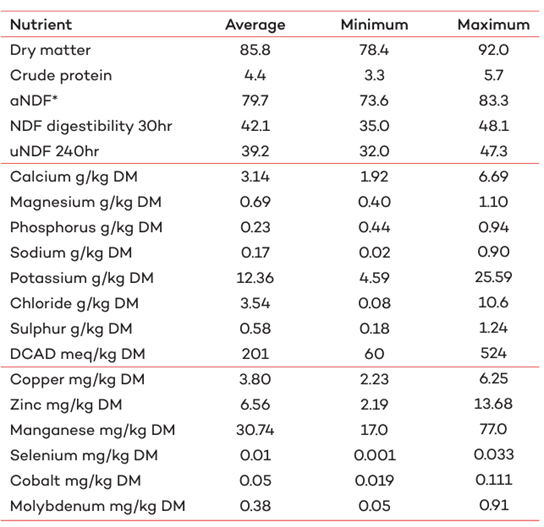
The table below highlights the variation seen in wheat straw samples analysed throughout the year.
How can straw quality affect cow performance?
Our ration calculations highlight some significant differences between feeding wheat straw with higher and lower fibre digestibility.
- Energy supply: Straw with lower fibre digestibility provided just 96.5% of the cow’s energy requirements, compared to 108.29% when feeding straw with higher fibre digestibility.
- Feed intake: Higher levels of undigestible fibre can potentially reduce dry matter intake, further limiting energy supply.
- Protein supply: Lower fibre digestibility can reduce the supply of metabolisable protein, potentially affecting colostrum production and subsequent milk yield.
These differences highlight the importance of understanding the quality of your straw, particularly during the critical transition period.
Managing mineral levels and milk fever risk
It is not just the fibre content of wheat straw that varies. Differences in mineral content can also have a significant impact on dry cow nutrition.
Variations in mineral levels can alter the overall DCAD of the ration, influencing milk fever risk and the quantity of anionic salts required to achieve the desired target.
Our analysis also highlighted considerable variation in the amount of calcium supplied by the resulting dry cow diets:
- Lowest: 40.8g/cow/day
- Highest: 62.9g/cow/day
- Average: 46.5g/cow/day
With a target of 30g or less when following a low-calcium feeding strategy, these results demonstrate how challenging it can be to achieve the desired calcium levels without knowing the mineral content of your straw.
Know what you’re feeding
Wheat straw should not be overlooked when assessing the nutritional quality of your dry cow ration. Analysing your straw can help to:
- Improve ration accuracy.
- Optimise energy and protein supply.
- Support dry matter intakes.
- Manage milk fever risk.
- Support colostrum production and subsequent milk yield.
- Promote better cow and calf health.
Understanding the nutritional and mineral content of your wheat straw is a valuable step towards a successful transition period and getting your cows off to the best possible start in their next lactation.
Speak to your local HJ Lea Oakes representative for more information.