Optimising Lamb Growth
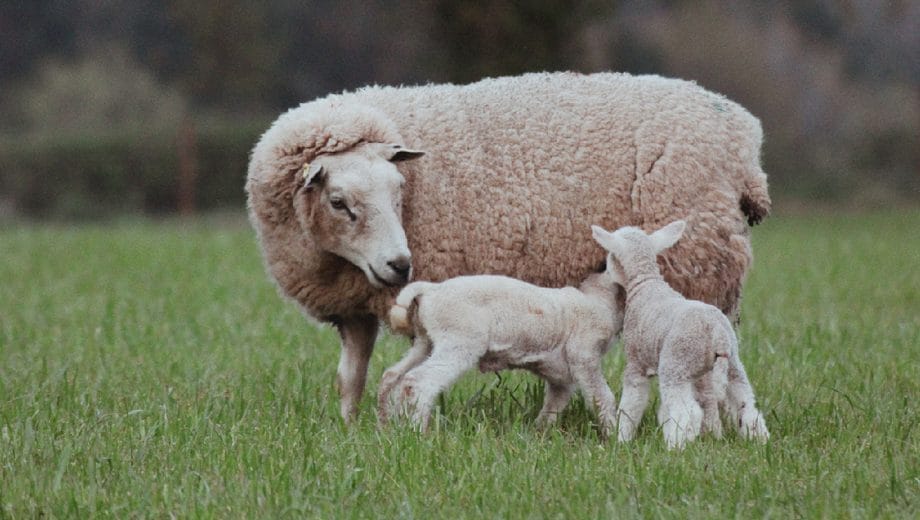
2026 is looking optimistic for UK sheep farmers, as lamb and cull ewe trade looks to remain firm despite lower scanning result in the earlier flocks. The 2026 lamb crop is expected to drop by around 2%, with the UK breeding ewe flock at its lowest in a decade. Furthermore, a lack of government support for farming and environmental schemes offering alternative income and land use suggest farmers may be reluctant to expand the flock numbers. However, every cloud has its silver lining, and this reduction in supply will be key factor in delivering healthy returns throughout the year, specifically at the time of religious festivals like Easter and Ramadan, where demand peaks.
To reap the rewards of these potential healthy returns on finished lambs start with happy healthy ewes. Access to clean/fresh water, good forage and supplementary feeds and maintaining a clean environment is essential for good ewe health and a lower disease risk during lambing. The amount of supplementary feeding needed in the run up to lambing depends on ewe requirements, base diet, forage quality and closeness to lambing. As unborn lambs grow faster at the end of pregnancy, the nutrient requirement of the ewe increases – at the same time her intake falls. Increasing the rate of concentrate feeding gradually through to lambing is the best way to insure against twin lamb disease and to give lambs the best possible start.
Meeting Nutritional Demand in Late Pregnancy
Healthy, well-fed ewes in late pregnancy are the foundation of profitable lamb production.
We formulate all our ewe feeds to meet this increase in nutritional demand. Our most popular ewe feed is the Super Ewe Extra Nuts. Furthermore, our ewe feeds have Sel-Plex selenium and Availa® Zinc added to help ensure healthy ewes all year round. Selenium is an essential part of the body’s antioxidant defence system and is needed for normal growth and reproduction. Availa® Zinc in ewes increases DM intake, colostrum quality and milk production. This allows for an increase in body weight gain in lambs, with a greater immune response.
Colostrum Management
When it comes to feeding lambs, colostrum is the key to a successful rearing. Remember the 4Q’s, Quality, Quantity, Quickly and Quietly. Ideally the colostrum quality should be at least 26.5% IgG on a Brix refractometer. Its vital lambs receive 200 ml of colostrum within two hours of birth and the equivalent of 200 ml/kg body weight with 24 hours. After six hours, the lamb’s ability to absorb the immunoglobulins into its bloodstream has reduced, which is why it is important to get colostrum in quickly.
Feeding lambs for efficient early growth
Ensuring forage or grass available to the ewe is of good quality to help with continued milk production. The younger a lamb is the greater conversion rate, producing a kilogramme of liveweight for less feed input. Ideally a lamb starter pellet such as HJL Supreme Stater Niblets (18% crude protein) should be offered and aiming for 150g-250g growth rate per day. With concentrate intakes of 100g/head at 2-3 weeks of age and increasing up to 300-400g/head by 8 weeks old. After this, the protein content in the creep feed can be dropped, HJL Lamb Starter/Finisher Pellets are ideal to putting that finishing touch on spring lambs.
For any further information on products mentioned or our HJL Sheep feeds please speak to your local sales rep or call the office.
Alice Cork – HJ Lea Oakes